




By: Jenna Frankel, Tommy Hammond, Gabrielle Margiotta, Andrea Millan, Solange Silva, Esther Wang
As the Beauty Industry’s Think Tank, one of CFMM’s mission is for students to research new societal trends and bring their learnings back to the work environment. Each year, students focus on senior-management level strategic marketing and decision making and work in groups to develop a trend analysis. This is the second in a series of four trend predictions to appear in this newsletter.
In 2020, underlying issues came to a head due to the catastrophic events propelled by the COVID-19 pandemic. Social tensions enhanced political polarization, highlighted racial and gender inequality, and pushed the topic of climate change from a trend to a movement.
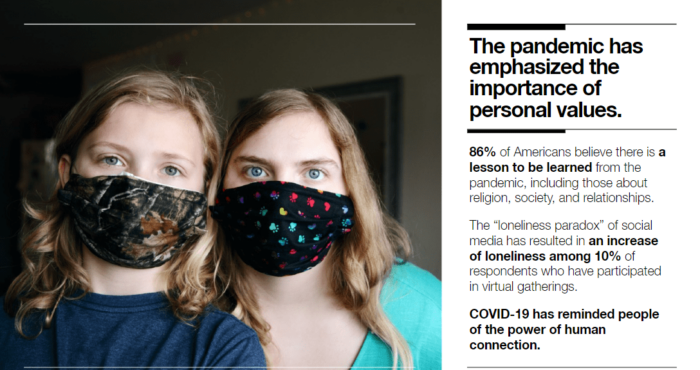
Eighty-six percent of Americans believe there is a lesson to be learned from the pandemic, including those about religion, society, and relationships. Overall, it has stressed the importance of personal values and reminded people of the power of human connection.
The Value Revolution
The word value is generically defined as “the regard that something is held to deserve,” but most people would typically relate value to money alone. As a result of the pandemic, over the last two years Gen-Z has aided in the shift of how people perceive value. More than 90 percent of this group considers a company’s impact on society as a benchmark in their decision making process. In fact, more than 70 percent of them will dive deep into a company’s history, values, and vision on issues, seeking honesty before making a purchase.
While a good product matters, what matters more is a brand that stands for something. We must take a step back and think beyond the product and price, and really think about the value created and its impact.
Taking a look at value within the beauty space, consumers demand much more. Most consumers want to purchase products from purpose driven companies. Additionally, consumers now have more of a deep emotional connection to brands that lead with purpose.
The following three macrotrends are revolutionizing the way consumers now perceive value.
Less Is More
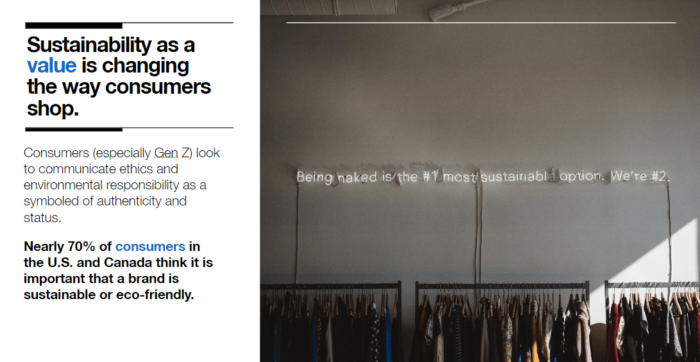
Over the last few years, sustainability has been on the rise and there is a shift in consumer mindset to less is more. The function of consumerism hasn’t changed. People still buy items to help them communicate a message; what has changed is that message. A great product is no longer enough to win over a consumer—shoppers want more than just quality from their purchase. They are looking to purchase brands, products, and services that align with their personal values.
In fact, 70 percent of consumers believe it’s important for a brand to be sustainable. This has driven a major corporate response and has resulted in the rise of purpose driven brands. Consumers have begun to question and hold brands, who are not pushing sustainability, accountable for their actions.
Eighty-eight percent say they want brands to make a difference and that it’s important that the consumer be a part of the change, too. It’s integral that brands and consumers work together for a sustainable future for all.
Taboo Collapse
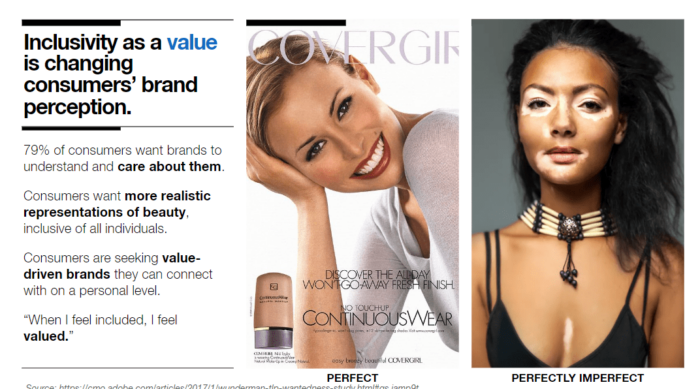
Due to the worldly climate, taboos including the LBGQT+ community, disabled people, and female sexuality have greatly affected our society. Over the past decade, organizations have worked hard to create diversity within the workforce. However, most of the time they’re not creating an inclusive environment where all employees feel valued and respected.
The beauty industry has seen a shift in consumer behavior. For ages, the idea of beauty was narrow—“a perfect woman with no defects.” Today, consumers no longer want to be seen or perceived as perfect and thrive on being perfectly imperfect. Furthermore, 79 percent of consumers want brands to truly understand and care about them. As a result, they are demanding a more realistic representation of beauty, not unattainable standards. Consumers are looking for value driven bands. Because as humans, when we feel included, we feel valued.
For example, in 2019 Fenty, Rihanna’s beauty brand, shook up the entire beauty space when the company launched a foundation with 40 different shades. Since then, there has been a rise in inclusive companies launching products like no other: Shakeup Cosmetics produces makeup for men and, Billie, a woman’s razor company, shows women with hair on their bodies in advertisements.
This movement will continue to rise, and brands will go beyond inclusivity. They will help consumers embrace their fears and create a stigma-free world.
Emotional Commerce
Over the last decade, technology has made our lives extremely convenient. In fact, tech has made it possible to go about your day without having to interact with anyone in person. This has been crucial this past year in helping combat the COVID-19 pandemic. Ironically, this does not help us with our social skills. According to US Surgeon General Pooja Kumar, we are living through a social recession.
The feeling of loneliness in young adults has increased in correlation to time spent on social media. According to research conducted by Harvard Business school pre-COVID, remote employees are showing a barrier to connect and form relationships with their co-workers. People are craving human connection more than ever.
As an industry, we have proven that we can create demand, educate, and sell online. But how can we go further and create human value for consumers?
A few brands are creating that path, inviting consumers to ditch technology and connect on multiple levels. Hallmark, for example, donated 2 million cards during the pandemic to help people connect with their loved ones around the world.
Brands will need to go beyond merely offering convenience as a value, and focus on offering human connection, especially in the post-COVID world. They will need to provide a forum and experiences where people can connect with each other at a personal level.
People want to be included and involved online and offline. Old and new consumers have shifted their views regarding retail and service. Their decision has changed from what to buy to why to buy, and it’s all due to the perception of value. Value has not only evolved but revolutionized, and we believe the revolution is here to stay. Consumers prefer to purchase from purpose driven brands with authenticity and real human connections.
CFMM 2021 Capstone Research Presentation: The Future of Consumerism
The Future of Consumerism is the focus of the 2021 annual global research conducted by the Beauty Industry’s Think Tank at FIT. The class of 2021 will share qualitative and original consumer research on global shifts in consumer lifestyle and the impact on brand and retail strategies due to the COVID-19 pandemic.
Part I of the research analyzes the new Chameleon Consumer, their evolving values, and emotional relationship to purchasing. Part II looks at The Future of Retail in a “phygital” global economy, as lines between brick-and-mortar and ecommerce continue to blur.
The webinar presentation will be held on June 23 from 5:00 pm to 6:30 pm. To register, CLICK HERE.
ABOUT FIT’S CFMM PROGRAM
The Master’s in Professional Studies in Cosmetics and Fragrance Marketing and Management is the only program of its kind. A think tank of innovative leadership, the program provides advanced education for emerging executives, fostering both creative and analytical business skills. Students obtain a global perspective through field studies in multiple overseas markets. Through academic and experiential learning, the curriculum facilitates the development of empathic leaders with the objective of shepherding brands that are global corporate citizens with products that delight and inspire the consumer.
Categorized in: Trends/Insights