




Brought to you by Alphametic; Written by Matthew Capala, Founder and President
The COVID-19 pandemic has affected businesses across all industries. Customer spending is at an all-time low, with retail sales dropping an unprecedented 8.7% in March.
The beauty industry wasn’t spared from the economic downturn caused by Coronavirus lockdowns. With much of the population staying at home to prevent the further spread of the virus, a full face of makeup has become an afterthought.
Beauty brands that are thriving in our “new normal” environment are the ones that pivoted to eCommerce and direct-to-consumer business models to reach customers who can’t leave the house. With most mall locations closed to the public and widespread fear preventing customers from leaving their homes, it’s crucial for beauty brands to make sure their online presence is in top shape.
Below are the SEO recovery strategies we’ve recommended to our beauty clients at Alphametic that you can apply to your own website to pick up momentum once the effects of COVID-19 have subsided. For the full list of in-depth SEO and SEM strategies, check out our free Beauty Marketing Guide to SEO.
Ecommerce Schema
Search engines need to crawl a website to figure out what it’s about. Schema is a standardized coding system that allows search engines to understand your website pages better, displaying details like product reviews right in the search engine results.
Adding structured data to your product pages helps your website stand out against the other results, which can increase click through to your page. For instance, out of the below results for “natural lip gloss,” the one with product rating schema stands out amongst the other results.
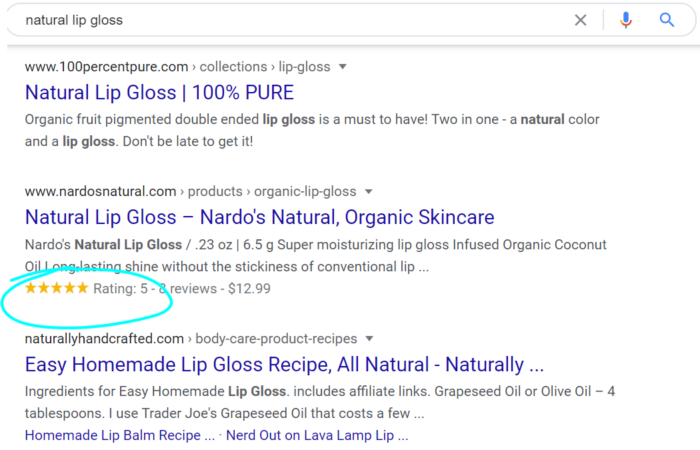
Schema isn’t limited to product ratings. You can add it to brand models, offers, reviews, categories, descriptions, FAQs, and more. A tool to help you generate schema code is Google’s Structured Data Markup Helper.
Long-form Beauty Guides
Studies show that the average content length for Page 1 Google results is around 1,900 words. This is the perfect opportunity to put high-quality, long-form content on your website to rank for your target keywords.
Creating beauty guides on the best way to use your products can help attract visitors for your product keywords, while also providing value to your customers.
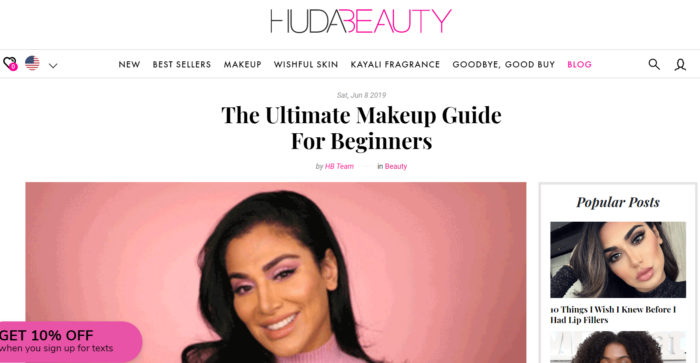
For example, Beauty blogger and entrepreneur Huda Kattan’s website features long-form articles such as the below “The Ultimate Makeup Guide For Beginners,” helping to attract her target base of makeup enthusiasts and novices.
Site structure / Navigation
While it may be something we take for granted, a well-structured website navigation is a crucial element of SEO and user experience. Creating high-quality landing pages that are organized in an intuitive way will help you rank for your target keywords while making your site easy for visitors to navigate.
Take the hair extension brand She’s Happy Hair for example, which is also one of our clients. Their website is organized based on their top product types: hair extensions and hair care. Each product type menu item has a dropdown with the product categories. By organizing their products by commonly-searched criteria, She’s Happy Hair is able to rank for product-specific keywords such as “Brazilian hair extensions.”

Category pages with content
The easy thing is to put all your products onto a standard eCommerce product grid for customers to scroll through. While this gets the job done, you’ll do better with search engines and engaging customers if you create product category pages with content.
For instance, natural beauty brand Provision Scents has a landing page for each product category, another client of Alphametic, including their Body Care line:
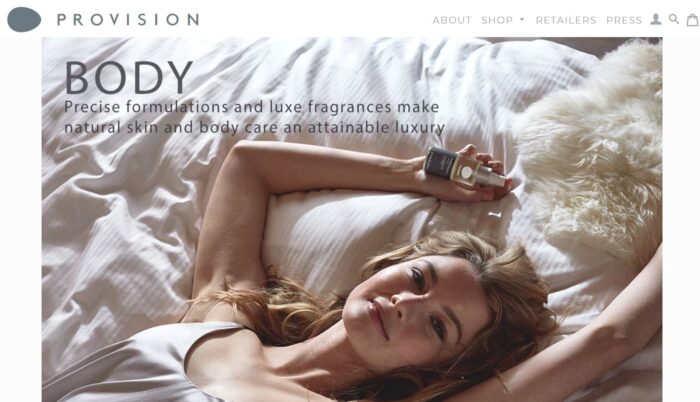
On this page, they highlight the benefits and features of their body care line, and also showcase their featured body care products. This helps them not only rank for keywords like “natural body oil,” but also higher-level product category keywords like “natural body care.”
Depending on your beauty brand, you may have several categories of products to showcase. Identify the top categories that you want to rank on, and write a separate landing page to house your products on.
FAQs and FAQ schema
Related to eCommerce schema, FAQ schema is structured data that alters what users see on the search engine results page. But instead of highlighting features like product ratings, FAQ schema is code that shows a preview of your website’s FAQ’s, right on the search engine results page.
Going back to the She’s Happy Hair website for an example, we can see that they have an FAQ page answering commonly asked questions about their hair products:
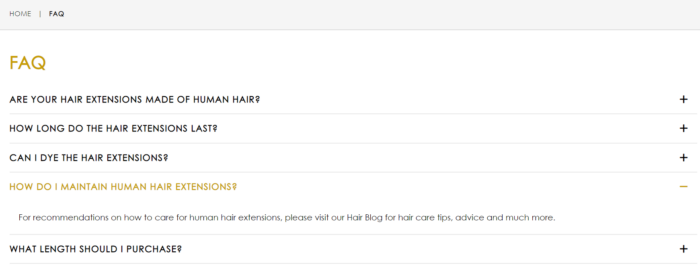
We put FAQ schema in the backend of these questions so that the questions preview on the search engine results page:
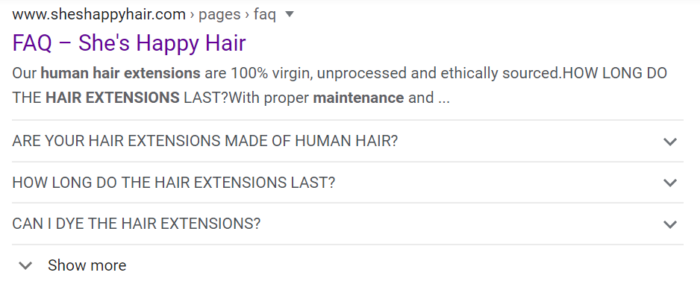
Installing schema not only helps your brand stand out against other results, but also helps you take up more coveted real estate on the search engine results page.
In the current strained economic climate caused by COVID-19 lockdowns, the competition for beauty customers just got fiercer. Set your beauty website up for success with these proven beauty SEO strategies today so that you put your online business on a fast-track recovery in the post-coronavirus economy.
About Matthew Capala
 Matthew Capala is a digital marketing strategist, speaker, and author. As a practitioner above all, he has spent the last decade delivering results to some of the most iconic beauty, fashion and retail brands in the world, leveraging the latest tools and strategies in SEO, SEM, content, social, and digital ads. As the Founder and Managing Director of Alphametic, a boutique digital agency, he manages a team of experts to help his clients increase ROI from their digital marketing efforts. Matthew has worked with the world’s leading brands in competitive markets, including L’Oreal, Makeup.com, and Calvin Klein.
Categorized in: Trends/Insights