




Written by Faye Brookman, Beauty Reporter, WWD and CEW
COVID-19 has altered the retail beauty landscape for at least the short-term. The personal touch of one-on-one consultation with makeup trials and makeovers will vanish at least for the remainder of the year. For many who are financially strapped, a $75 eye cream may no longer be within reach. And many retailers will cease to exist for have winnowed down store count making them no longer accessible.
So, who will shoppers turn to? Who are the retailers to watch? To look forward, it helps to first dig into what happened during stay at home orders.
Many Americans turned to online options for beauty needs while the country was locked down. Listrack, a marketing automation platform, recorded a 28% leap in overall eCommerce revenue since March 13 when the state of emergency was called as a result of COVID-19.
Drugstores, discounters, and supermarkets who could stay open because they sold essentials also garnered more beauty sales—but in select categories. According to IRI data for the 12-week ended April 19, 2020 in drugstores revealed dollar volume of nail care soared 24.3%, hair coloring was up almost 12% and hand sanitizer sales rocketed 203%. But shoppers didn’t always reward mass-market stores with sales of color cosmetics where sales were mostly down—a fact attributed to both the decline in overall usage of makeup even before people started working at home and a shift to purchasing from higher-end beauty purveyors like Ulta Beauty.
As stores start to open back up—will consumers change how they shop? Many think so. Of course, Ulta Beauty and Sephora will always have enthusiasts. Department stores are taking major moves to ensure a safer shopping experience. But there are at least some shoppers looking for a new path.
Here are retailers to watch:
CVS/Walgreens/Target/Walmart

The shutdown of stand-alone beauty retailers could give drug and food stores a chance to convert more shoppers to their beauty sections, suggests Preston Bottomy, president of HatchBeauty Brands. Beauty and bananas sound more convenient than ever before,” he says. These four mass marketers in particular have burnished beauty departments physically and from an assortment standpoint. Shoppers pinched for discretionary spending could trade down to mass brands. Those who tried a mass skincare line when they couldn’t get to a derm or specialty store may decide that is works just as well. At-home hair color is expected to have some lasting appeal along with at-home manicures as consumers are reluctant to return to salons.
Shoppers also won’t want excess exposure to crowds meaning fewer shopping trips—visits to these stores are necessities, especially for pharmaceuticals. Mass marketers have always been self-serve in beauty with blister-packaging that is viewed as sanitary—although the original goal was anti-theft.
Mass retailers have benefited from adding niche brands over the past five years and will likely continue to be receptive to nascent beauty lines, especially those in emerging categories.
Pharmaca
Although Pharmaca has been offering a fusion of natural health and beauty in a wellness setting. Now, more than ever, the retailer is emerging as one to watch in beauty. The 29-store retailer has clean beauty standards, high levels of service and a mix focused on indie beauty and derm brands.
H-E-B/Hy-Vee
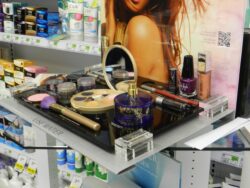
A supermarket might not be top of mind when it comes to beauty, but these two chains are rewriting the rules. And, with consumers looking for a few shopping stops, these are the ultimate one-stop spots. H-E-B operates departments called Beauty by H-E-B that have brands like Smashbox, Pixi, Becca, Stila, and BareMinerals along with mass staples such as L’Oréal and CoverGirl. Hy-Vee is another food retailer elevating beauty with a bath boutique called Basin as the centerpiece. Stila, Philosophy, and OPI have also been featured in the grocer’s beauty department.
With food razor-thin food gross margins, many supermarket chains are all in on beefing up beauty for profits. It will be interesting to see if shoppers are open to buying beauty with bread in a post-COVID-19 world.
Follain/The Detox Market/Credo
There is more focus than ever on ingredients. People are looking to remove toxins and eyeballing ingredients like elderberries, vitamin C, and echinacea. Retailers like Follain, The Detox Market, and Credo all curate the assortments and have standards product formulas must meet. Shopping these stores does the legwork making shoppers feel the products are safe.
Independent Apothecary/Family Beauty Owned Shop
Most cities and towns have one—the local drugstore where you know the pharmacist or a hometown family-run business where the owner has personal relationships with shoppers. In New York City there is C.O. Bigelow; in Los Angeles, there is Larchmont Beauty. Post coronavirus many people are looking to support local businesses and return to a slower pace of life. Independent stores know your name, they’ll make a special order for you, they offer curbside pickup and they are generally less crowded than big box stores. Most have some level of beauty and, if business support it, are poised to expand the category in the future.
QVC/HSN
 Not technically physical retail, direct channel shopping is set to flourish because it offers contactless selling, but with the personal touch of the hosts and in many cases brand founders. The channels offer fertile growth opportunity for beauty brands. For example, when GlamSquad had to hit pause on its in-home services and makeovers at CVS, the company kicked up an already planned launch on QVC of its most popular hair and makeup products. Home shopping channels are a great equalizer—often selling both prestige and mass brands with equal emphasis.
ABOUT FAYE BROOKMAN
 Faye Brookman has reported on the beauty and personal care industry for more than 35 years. She was a columnist for Women’s Wear Daily and contributes to Beauty Independent, CEW Beauty News and other industry news sources. Her articles have also appeared in USA Today, The Wall Street Journal and The Washington Post.
A graduate of Syracuse University’s S.I. Newhouse School of Public Communications, Brookman resides in Skillman, N.J.
Categorized in: Trends/Insights