




By Kayla Villena, Senior Beauty Analyst, Euromonitor International
Pre-COVID-19, digitalization in beauty and personal care was marked by an ever-shrinking gap between beauty industry professionals and beauty consumers. As a result, consumers have been more actively participating in the creative process that was traditionally limited to direction from beauty brands.
Simultaneously, a growing online presence, stemming from consumer demand for convenience and expanded product availability of international, indie and direct-to-consumer brands in the past decade, created a growing appetite for information among highly engaged beauty consumers. The digital beauty consumer evolved to not only become knowledge-savvy but also willing to challenge and vocally influence the beauty industry. Digital disruption was already a transformative force pre-pandemic but will continue to accelerate due to the impact of COVID-19, setting the tone for digital to become a more dominant means of beauty consumption and spend.
In the US, nearly one-quarter (23%) of consumers are digital beauty consumers, compared to 32% globally, according to Euromonitor International’s Beauty Survey 2019. These consumers not only purchase beauty and personal care products through online retailers but are also influenced by digital media or online user- or expert-generated content when shopping for or using beauty and personal care products.
Though certain Asian markets register the highest proportions of digital beauty consumers, the best opportunities to increase beauty digitalization are in markets with high personal care per capita spend like the US, Australia or the UK. The sizeable beauty markets of the US, Germany and the UK, which register 15% to 21% of digital beauty consumers, are expected to digitalize rapidly, following Asia Pacific’s digitalization pattern after the SARS pandemic. Understanding the digital beauty consumer and the evolution of beauty digitalization are paramount, since the pandemic converted non-digital consumers to digital consumers to varying extents across markets.
Rising potential for beauty apps and personalization
Beauty digitalization through apps is an avenue of opportunity amid the pandemic. Virtual try-ons and consumer reviews will likely increase as substitutes to in-store trial. Almost 60% of global digital beauty consumers used beauty apps in the past 12 months in 2019, compared to 22% of the rest of online consumers, according to Euromonitor International’s Beauty Survey 2019. Beauty integration in apps drives momentum in China and among Southeast Asian markets (e.g. WeChat), but usage is nascent in markets with sizeable beauty e-commerce, such as the US and the UK. Apps that focus on preventative health and self-care and link health with beauty will be more relevant. The importance of beauty apps, and to a wider extent, product reviews will likely increase, building on anecdotal evidence in Q1 and Q2 2020 that noted an uptick in time spent reading consumer reviews as a substitute for in-store assessment.
Amid tightening consumer spend from the pandemic, choosing the right product reduces the amount spent on multiple, ineffective products. Therefore, personalization will remain relevant among digital beauty consumers who can use digital tools to better understand individual needs and help guide product choice. For example, leveraging selfie analysis through the Skin360 diagnostics app, Neutrogena helps users understand skin type with scores, track changes and receive personalized routine recommendations refined through artificial intelligence (AI) over time. L’Oréal’s AI-powered Perso creates a plethora of on-demand options in skin care, liquid lipstick and foundation at home, rather than in store, assessing big data factors and top skin concerns and coordinating color shades with outfits. However, these unique selling points are more relevant in a post-lockdown and recovery phase. In the short term, personalization will take a backseat to essentials, but is still an opportunity for brands to provide discovery and delight and to serve as a method for differentiation, if backed by efficacy.
Beauty brands go live online
Livestreaming is the new frontier of digital engagement in the beauty industry. Similar to the well-known QVC or Homeshopping Network model, beauty products are showcased live, but livestreaming allows for real-time questions and audience feedback. Additionally, the hosts are typically official brand ambassadors or beauty influencers. In June 2020, JD.com and Kuaishou, a video sharing and livestreaming platform in China, partnered to have key opinion leaders livestream and make short videos to promote Estée Lauder essence and MAC lipsticks, among other products, that were delivered through JD.com. Livestreaming helped solidify the success of beauty in JD.com’s 6.18 shopping festival, given that beauty products ranked among the top-three categories on the platform in terms of number of customers. The growth of livestreaming in China in 2019 puts it at the forefront of this new area of digitalization, being the first country to implement rules on livestreaming e-commerce as of July 2020.
North America is another region primed for livestreaming investment. Brands in the Estée Lauder Companies Inc. and L’Oréal Groupe portfolios offered shoppable livestreams on their websites in the US and Canada. Some featured beauty influencers who already had strong ties to the brand and sizeable social media followings. Beauty brands are also experimenting with new ways to leverage social media and drive digital engagement. For example, e.l.f. Cosmetics was one of the earlier beauty brands to embrace TikTok and recently announced the launch of a reality show with three of the platform’s most notable influencers. As the beauty industry ramps up for digitalization, investment in livestreaming and digital engagement as a permanent feature of the beauty shopping experience is expected.
Opportunities in men’s grooming
COVID-19 gave consumers more time to spend on skin and hair routines, experiment with products and get ahead of the learning curve since people are mainly staying at home or not venturing out as much or as long. This home seclusion provides opportunities in men’s grooming.
Growing social media selfie culture and YouTube influencers are encouraging men to break norms and adopt cosmetic beauty routines to varying extents worldwide. However, the disparity of in-store male-centered color cosmetics options in most markets outside Asia Pacific pushes them to online channels. The preference for digital purchase locations among men is most pronounced in color cosmetics, whereas men trend with the buying habits of total respondents for hair care and skin care. Men’s grooming brands are aptly positioned to leverage digital to target consumers with products that suit them from the comfort and privacy of their homes and reduce time spent in stores. The declines in men’s shaving in the US are dragging down the men’s grooming segment, further necessitating another avenue for men’s grooming brands to facilitate demand for faster-growing segments, such as men’s skin care.
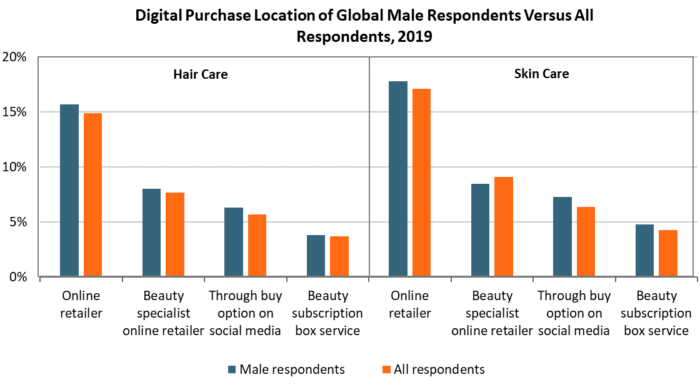
Source: Euromonitor International’s Beauty Survey 2019
This digital beauty consumer segment will continue to grow in both size and influence as more shoppers rely on digital for beauty and personal care purchases, discovery and education during the COVID-19 pandemic and in the long term. Changes in the demographics of digital beauty consumers also create opportunities for beauty and personal care brands to establish and grow digital engagement with different consumer groups. Significant ramp up is expected across all regions with investments in livestreaming being the focus for North America.
About Euromonitor International
Euromonitor International is a global market research company providing strategic intelligence on industries, companies, economies and consumers around the world. Comprehensive international coverage and insights across consumer goods, business-to-business and service industries make our research an essential resource for businesses of all sizes.

About Kayla Villena
 Kayla Villena is a senior analyst at Euromonitor International based in Chicago. She analyses the beauty and personal care industry, looking at changing consumer preferences, megatrends influencing adjacent industries, and the ripple effects from industry disruptors and innovators. Leveraging custom consulting experience at Euromonitor, she works closely with stakeholders to understand their strategic goals and communicate how to win, synthesizing beauty insights with Euromonitor’s retailing and digital consumer systems, as well as Euromonitor’s Beauty Survey and Via Pricing systems.
She has spoken at industry events, such as in-cosmetics North America, Cosmoprof North America, MakeUp in New York, and several Jefferies’ events. She is a regular contributor to Natural Products INSIDER and Beauty Packaging and has been featured in Bloomberg, The Wall Street Journal, CosmeticsDesign and Glossy, among other publications.
Kayla holds master’s and bachelor’s degrees in communication from the University of Florida.
Categorized in: Trends/Insights